



European spade
European spade nail, also known as stag spade nail or European deep mountain spade nail, is a large beetle, belonging to the Coleoptera spade family. The body length of the male individual can reach 35-60mm, and the female is slightly smaller. The male insect has a large red upper jaw, shaped like a deer horn, used to compete for mates. It is mainly distributed in Europe, from southern Britain to Bulgaria, Greece and other places in Eastern Europe, and even in the Mediterranean coast of North Africa and West Asia. It is the largest native beetle in Europe. The adults are often active in late spring to summer, gathering in broad-leaved forest trees to suck sap or juice, and are phototactic. are completely metamorphic insects. The larvae live in rotting wood and feed on dead wood

Serrated spade worm
The serrated spade worm, also known as the Indonesian gold spade worm, is a spade beetle insect distributed in Indonesia and Papua New Guinea. It is known for its varied metallic colors, including gold, green, blue and purple. The body is 25 to 57mm long and has a large, upwardly curved, three-forked jaw. It is a diurnal insect that often moves on flowers during the day. Male insects cut through the epidermis of plants to absorb juice, while female insects rely on the juice "prepared" by male insects. The larvae feed mainly on rotten wood, and adults can eat sweet fruits or jelly for beetles. Breeding is easier, larval development period is short, suitable for beginners breeding.

Double spine beetle
The double ridged longhorn beetle is a beetle belonging to the longhorn family. This beetle is distributed in Taiwan and China. The body length is 9.5-17.0 millimeters. The body is covered with extremely thick and dense light colored fuzz, ranging from light grass green to light blue, and decorated with black stripes, composed of a base color and black fuzz. The variation between light and black colors is significant, forming different spotted patterns, especially in elytra. The anterior chest and back panel are pale in color, with circular black spots on both sides of the central area. Each elytra has three large black spots, the first of which is located on the outer side of the base, including the shoulders; The second one is slightly lower, before the middle; Stretching inward wider, but not reaching the middle seam.

Batocera horsfieldi
Yun Ban Bai Tiao Tian Niu is a beetle belonging to the family Antlers and Spades. This beetle is distributed in provinces such as Sichuan, Yunnan, Chongqing, Guizhou, Guangxi, Guangdong, Taiwan, Fujian, Jiangxi, Anhui, Zhejiang, Jiangsu, Hubei, Hunan, Hebei, Shandong, and Shaanxi in China.

Deer horn shovel shaped insect
The "little deer horn shovel beetle", also known as the "little deer horn beetle", is a beetle belonging to the family of deer horn shovel beetles.

Japanese catalpa beetle
The Japanese catalpa beetle is a beetle belonging to the Lucanidae family, with the scientific name "Prosopocoilus inclinatus". This beetle is distributed in Japan (including Hokkaido, Honshu, Shikoku, Kyushu, Sado Island, Tsushima, Yakushima Island) and the Korean Peninsula.

Spotted shovel armor specimen
The spotted shovel beetle, a member of the Coleoptera family, is distributed in regions such as Heilongjiang, Shaanxi, Shanxi, Gansu, Henan, Zhejiang, Yunnan, Guizhou, Sichuan, Fujian, Taiwan, and Beijing. The upper palate of male insects is well-developed, resembling the horns of a stag. Many types of horns have finer branches and teeth, and the length of the horns is equivalent to the length of the body, which can cause bleeding on the hands. But some palates are too large, which can become a burden on action. Thick and robust, black or brown in color. However, there are few bright colors.

Spade armor specimen
Spades are a collective term for insects in the order Coleoptera, family Spades, of the phylum Arthropods. The adult body of the shovel beetle is elliptical in shape, black or brown in color, mostly glossy, and has a solid surface; The upper forehead of male insects is mostly large and protruding like deer antlers. Some species have teeth on the upper jaw, while others have forked horns at the end of the upper jaw; The elytra cover the entire abdomen. The spade beetle is named because its shape resembles that of a shovel when its elfin is closed. Spade armor, also known as shovel shaped armor, shovel shaped insect, or deer antler insect.

Spotted shovel armor specimen
The spotted shovel beetle, a member of the Coleoptera family, is distributed in regions such as Heilongjiang, Shaanxi, Shanxi, Gansu, Henan, Zhejiang, Yunnan, Guizhou, Sichuan, Fujian, Taiwan, and Beijing. The upper palate of male insects is well-developed, resembling the horns of a stag. Many types of horns have finer branches and teeth, and the length of the horns is equivalent to the length of the body, which can cause bleeding on the hands. But some palates are too large, which can become a burden on action. Thick and robust, black or brown in color. However, there are few bright colors.

Saw shovel shaped worm specimen
Prosopocoilus inclinatus, also known as serrated shovel worm, is a species of insect in the family Prosopocoidae. Distributed in Japan and South Korea. The sawdust beetle is named after its serrated, horn like curved jaws, which likely evolved to compete with the unicorn fairy for resin. The larval stage lasts for 1-3 years, while the pupal stage lasts for over a month. Adult males measure 26-74.5 millimeters, while females measure 19.5-41 millimeters.

Giraffe saw shovel specimen
The giraffe saw shovel is an insect in the family Scaridae, with a long upper jaw and serrated teeth. Giraffe saws and shovels live in Southeast Asia. The body length is 4-12 centimeters. It has the longest upper jaw and the sharpest serrations in the shovel armor. The end of the upper jaw has two forks, and the teeth on the left and right sides are asymmetrical and slightly curved. The protruding teeth on the upper jaw may appear aggressive, but in reality, the biting force is not strong. The tips of the teeth may appear sharp, but in reality, they are easily broken. There is also a glossy black shell. But the female insect does not have an upper jaw, while the young male insect likes to fight. The male insect's tooth roots are highly destructive and can cause certain injuries to various shovels.

Spade armor specimen
Spades are a collective term for insects in the order Coleoptera, family Spades, of the phylum Arthropods. The adult body of the shovel beetle is elliptical in shape, black or brown in color, mostly glossy, and has a solid surface; The upper forehead of male insects is mostly large and protruding like deer antlers. Some species have teeth on the upper jaw, while others have forked horns at the end of the upper jaw; The elytra cover the entire abdomen. The spade beetle is named because its shape resembles that of a shovel when its elfin is closed. Spade armor, also known as shovel shaped armor, shovel shaped insect, or deer antler insect.

Spotted shovel armor
Spotted shovel beetle, a member of the family Scaridae in the order Coleoptera, has a well-developed upper palate in males that resembles the horns of a stag. Many types of horns have finer branches and teeth, and the length of the horns is equivalent to the length of the body, which can cause bleeding on the hands. But some palates are too large, which can become a burden on action. Thick and robust, black or brown in color. However, there are few bright colors. Distributed in Heilongjiang, Shaanxi, Shanxi, Gansu, Henan, Zhejiang, Yunnan, Guizhou, Sichuan, Fujian, Taiwan, Beijing and other regions.

Peruvian four eyed shovel worm
The four eyed shovel is distributed in countries such as Peru, Colombia, Venezuela, Ecuador, and Bolivia in South America. Its habitat is usually located in tropical rainforest mountainous areas at an altitude of 2000 meters, with low temperatures. The appearance of the four eyed shovel is quite strange, with a very developed outer edge of the eye. From the side, it seems that there are a pair of eyes on each side of the head, which is jokingly referred to as the four eyed shovel armor. The male worm's body length is about 50-80mm, and the body length excluding the maxilla can usually reach 50mm. It is the second largest shovel beetle in South America, second only to the Chilean long toothed shovel.

Shovel armor
Spades are a collective term for insects in the order Coleoptera, family Spades, of the phylum Arthropods. The spade beetle is named because its shape resembles that of a shovel when its elfin is closed. Spade armor, also known as shovel shaped armor, shovel shaped insect, or deer antler insect. Spades are distributed on all continents except Antarctica, living in lush broad-leaved forests, orchards, and parks. In recent years, shovel like insects have become highly sought after in some regions and countries, and many people keep them as pets. Spades have also become a form of entertainment, and breeding and breeding them has even become an industry.

Antlers insect
Antlers are beetles in the order Coleoptera, also known as beetles. The upper jaw of male armor is highly developed and horn shaped, with a toothed protrusion on the inner edge that is very similar to deer antlers, hence it is called stag antler beetle. Antlers are distributed on all continents except Antarctica. Most people go out at night to search for food. In Taiwan, both adults and children are particularly fond of deer antler worms. But in recent years, some rare species have been on the brink of extinction due to excessive capture and sale, as well as deforestation in their habitats. Antlers are second-class protected animals in China, and buying and selling them is illegal.

Popular Models
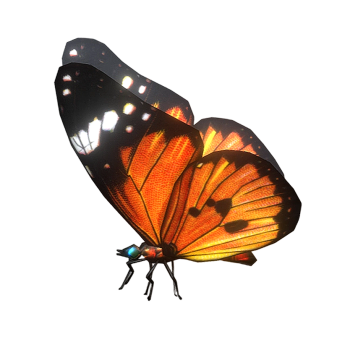
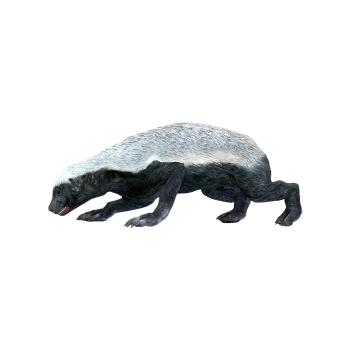
Honey Badger (3D animated model)
194 View
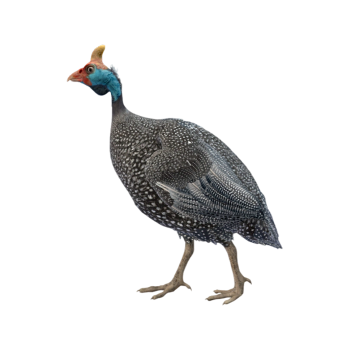
Guinea fowl (3D animated model)
165 View
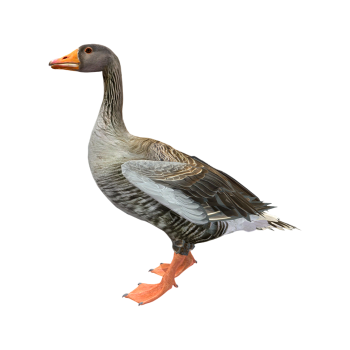
Wild Goose (3D animated model)
187 View
Red Fox (3D animated model)
155 View
Random Model

Fuyuye Luan
927 View

Sedge
873 View

Brook Chrysanthemum Screen
726 View

Pagani Huayra2020 Convertible
969 View

Ayoka Temple Pagoda
590 View

Ford Mustang 1965
812 View

㺢㹢狓 specimen
772 View

Vessi CityScape Women's sneaker
692 View

Nepal Cultural Heritage Frog God
788 View